
Are you still paying for hundreds of channels you never watch? The way we consume television is undergoing a massive shift, moving beyond cable and satellite. A powerful new method of streaming is putting viewers in complete control.
This technology is called Internet Protocol Television, or IPTV. It delivers television content directly through your internet connection. This allows for both live broadcasts and a huge library of on-demand movies and shows.
The market for this service is exploding. It was valued at nearly $69 billion in 2023 and is projected to surpass $200 billion by 2030. This growth shows a clear trend towards more flexible and personalized entertainment. Providers like IPTV Smarters Pro offer instant access to vast content libraries in stunning quality.
This guide will explore how this service works. You will learn why it represents the future of home entertainment and how you can benefit from this revolutionary way to watch television.
Key Takeaways
- IPTV delivers television programming using your internet connection instead of traditional methods.
- It offers both live TV streams and a massive video-on-demand library.
- The global market is growing rapidly, indicating a major shift in viewer habits.
- This service provides greater control and flexibility over your viewing experience.
- High-definition streaming quality and instant access are key advantages.
- It is a cost-effective alternative to cable and satellite television packages.
Introduction to IPTV Technology
Modern entertainment systems have transformed dramatically through innovative internet protocol solutions. This technology delivers broadcast-quality television directly through your internet connection.
Definition and Core Concepts
The International Telecommunication Union provides a comprehensive definition of this multimedia service. They describe it as delivering television, video, audio, text, graphics, and data over managed IP networks.
“Multimedia services such as television/video/audio/text/graphics/data delivered over IP-based networks managed to provide the required level of quality of service and experience, security, interactivity and reliability.”
This managed approach ensures consistent streaming quality that differs from regular internet video.
Historical Milestones in IPTV Development
The journey began in 1995 when Precept Software coined the term “IP/TV.” This marked the birth of an industry that would revolutionize content delivery.
In 1998, US West launched TeleChoice in Phoenix, Arizona. This became the first digital television service over telephone lines using VDSL technology.
Kingston Communications introduced Kingston Interactive Television in September 1999. Their IPTV over DSL service demonstrated commercial viability for everyday users.
These developments show how the technology evolved from experimental stages to robust platforms. Today’s premium IPTV services build upon decades of innovation and refinement.
The Evolution and History of IPTV
Television delivery has undergone a complete revolution, moving from fixed cable and satellite systems to flexible internet-based streaming. This transformation represents one of the most significant changes in entertainment history.
From Cable and Satellite to Internet Streaming
Before the 1990s, experts believed quality television through telephone cables was impossible. Bandwidth limitations seemed too severe for acceptable video-on-demand services.
Two breakthrough technologies changed everything. Motion-compensated DCT video compression reduced bandwidth needs from 200 Mbit/s to just 2 Mbit/s. ADSL transmission boosted telephone line capacity twentyfold.
These innovations opened the door to modern streaming services. In 2005, SureWest Communications launched North America’s first HDTV channels over an internet protocol television service.
Bell Canada’s “Bell Fibe” rollout in 2010 demonstrated successful bundling with internet and phone services. This created compelling alternatives to traditional cable packages.
The historic moment arrived in 2015. Pay internet television users surpassed pay satellite television users in Western Europe. This confirmed streaming as the preferred choice for millions.
This evolution shows internet-based delivery isn’t just another option. It’s the natural progression of television technology, combining reliable broadcasting with internet convenience.
How IPTV Works
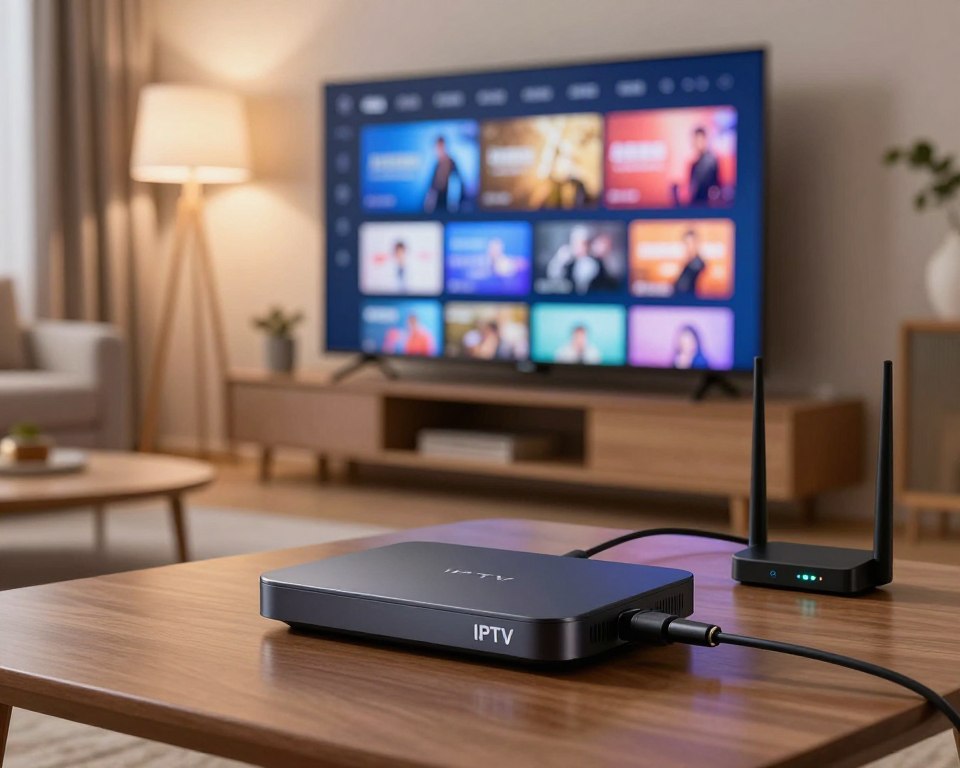
Behind every seamless television experience lies a sophisticated delivery system that transforms your internet into a powerful entertainment pipeline. This technology operates through a carefully designed process that ensures reliable streaming to your devices.
IPTV Streaming Process and Protocols
The journey begins when providers acquire content rights and encode programming into efficient formats like MPEG4. This compression maintains excellent quality while minimizing bandwidth demands on your internet connection.
When you select a show, your request travels to the provider’s server network. The system immediately begins streaming video data in small packets directly to your IP address. This personalized delivery method represents a significant advancement over traditional broadcast television.
Advanced protocols power this entire ecosystem. IGMP manages channel changes and live stream subscriptions. IP multicast efficiently distributes television channels to multiple viewers simultaneously. Real-time Transport Protocol ensures your content arrives with minimal delay.
Role of Set-Top Boxes and Internet Connections
Your set-top box serves as the crucial translator in this process. It receives data packets through your internet connection, decodes the compressed information, and reassembles everything into smooth, high-quality video.
The continuous receive-and-decode cycle happens seamlessly in real-time. This architecture allows for broadcast-quality television with enhanced features like pause and rewind capabilities. A reliable internet connection is essential for maintaining uninterrupted playback.
This sophisticated system demonstrates how protocol television transforms your broadband into a content delivery pipeline. It brings thousands of channels directly to your screen with unprecedented control and flexibility.
Comparing IPTV and Traditional Television
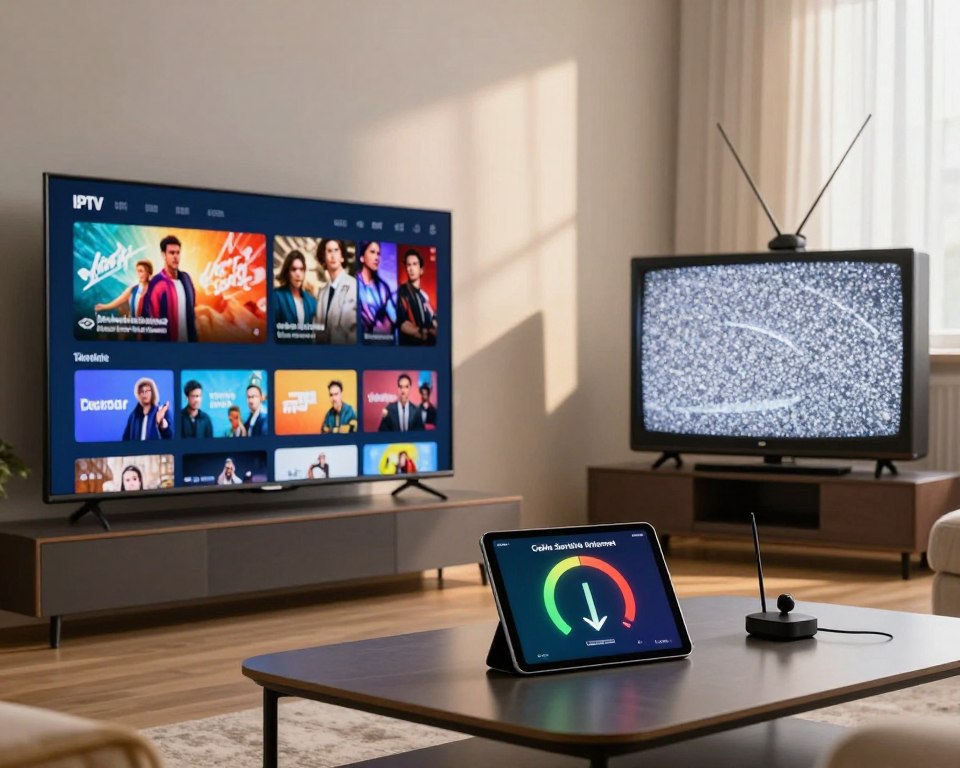
The battle for your television screen comes down to three distinct technologies with fundamentally different approaches. Each system delivers entertainment to your home through unique pathways that shape your entire viewing experience.
Cable, Satellite, and IP Streaming Differences
Traditional cable systems use physical coaxial wires running directly to your home. Satellite technology transmits signals wirelessly via radio waves through space. Both methods operate on a broadcast model where content flows continuously to all users simultaneously.
Modern IPTV services leverage your existing internet connection for content delivery. This client-server approach allows you to request specific programming on demand. Unlike traditional systems, these services store content on remote servers for instant access.
You’ll appreciate these key advantages of internet protocol television:
- Flexible scheduling – Watch your favorite shows anytime instead of being tied to broadcast schedules
- Multi-screen access – Use one subscription across all televisions in your home without extra fees
- Interactive features – Pause, rewind, and fast-forward live programming with ease
The fundamental difference lies in control. Traditional systems push content to you, while modern services put you in charge of your entertainment choices. This shift empowers users to create personalized viewing experiences that match their lifestyles.
Benefits and Advantages of IPTV Services
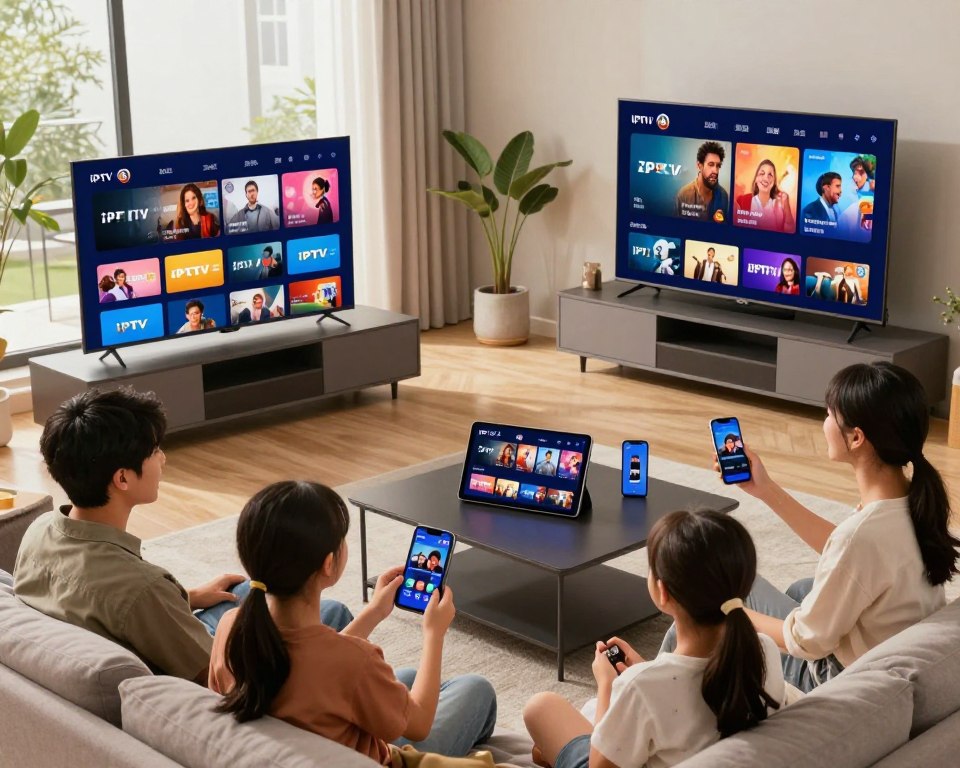
Imagine a television service that adapts to your life, not the other way around. Modern IPTV services deliver exactly this level of personalization and convenience.
These platforms transform how you interact with entertainment. They put you in complete control of your viewing schedule and preferences.
On-Demand Flexibility and Enhanced Viewing Experience
The freedom to watch what you want, when you want, is revolutionary. Build your own primetime instead of being tied to broadcast schedules.
Never miss your favorite shows again with robust catch-up features. Intelligent recommendation engines learn your preferences to suggest content you’ll genuinely enjoy.
Interactive program guides let you search by genre, actor, or keyword. Real-time information during live events creates an immersive experience traditional television cannot match.
Cost-Effectiveness and Multi-Device Access
These services offer significant financial advantages over traditional options. Customized bundles let you pay only for channels and content you actually watch.
Month-to-month flexibility eliminates long-term contracts. You save on equipment fees by using apps on devices you already own.
Access your entertainment anywhere across multiple devices. Stream on smartphones during commutes, tablets while traveling, or smart TVs at home.
| Feature | Traditional TV | IPTV Services |
|---|---|---|
| Viewing Schedule | Fixed broadcast times | On-demand flexibility |
| Device Access | Limited to main TV | Multiple devices simultaneously |
| Content Control | Basic channel surfing | Personalized recommendations |
| Cost Structure | Fixed bundles with unused channels | Customized packages |
The combination of these benefits makes IPTV services an attractive choice for modern viewers. You gain unprecedented control over your entertainment experience while saving money.
Understanding the Architecture of IPTV
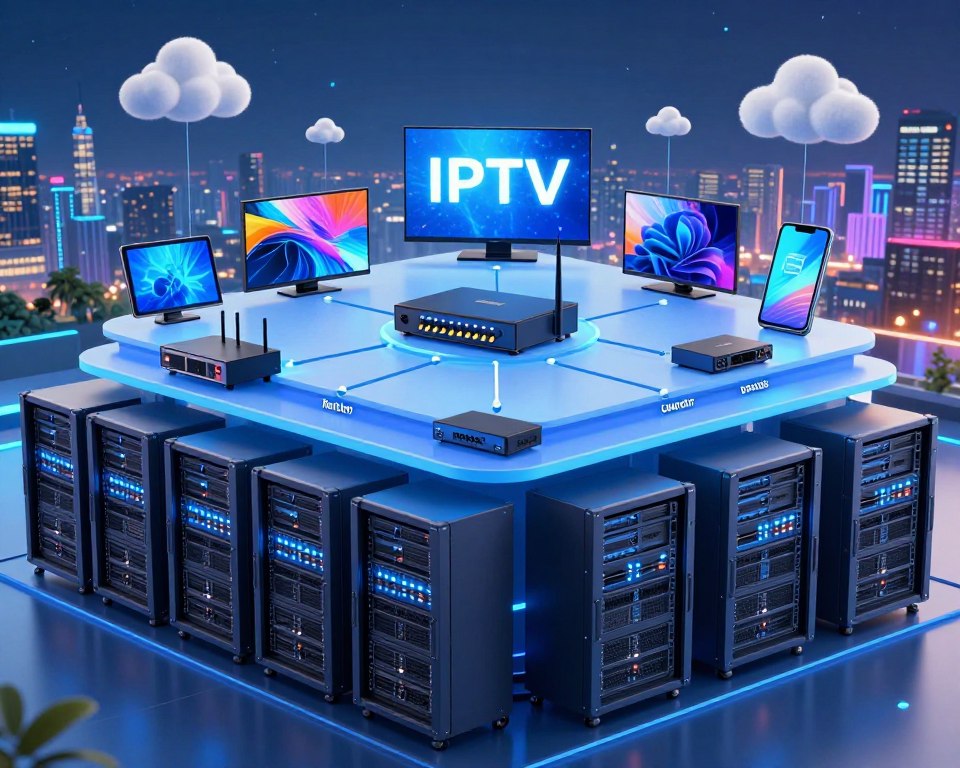
Behind every click of your remote lies a complex infrastructure designed to bring entertainment directly to your screen. This architecture determines how efficiently your favorite shows and movies reach your devices.
Providers choose between different system models based on their scale and service requirements. Each approach offers unique advantages for content delivery.
Centralized and Distributed System Models
The centralized model stores all media content on central servers. This straightforward approach works well for smaller video-on-demand deployments.
Distributed architecture spreads content across multiple servers. This system handles massive viewer numbers during peak streaming times.
Key components work together seamlessly. The IPTV head-end encodes live channels into multicast streams. Video-on-demand platforms store thousands of movies and shows.
Interactive portals provide easy navigation through available services. Delivery networks carry data packets to your devices.
| Architecture Type | Best For | Content Storage | Scalability |
|---|---|---|---|
| Centralized | Smaller providers | Single location | Limited |
| Distributed | Large-scale services | Multiple servers | High |
Understanding this architecture helps you appreciate the technology behind reliable streaming. Professional providers invest in sophisticated systems to deliver quality entertainment.
Exploring what is iptv: The Basics and Beyond
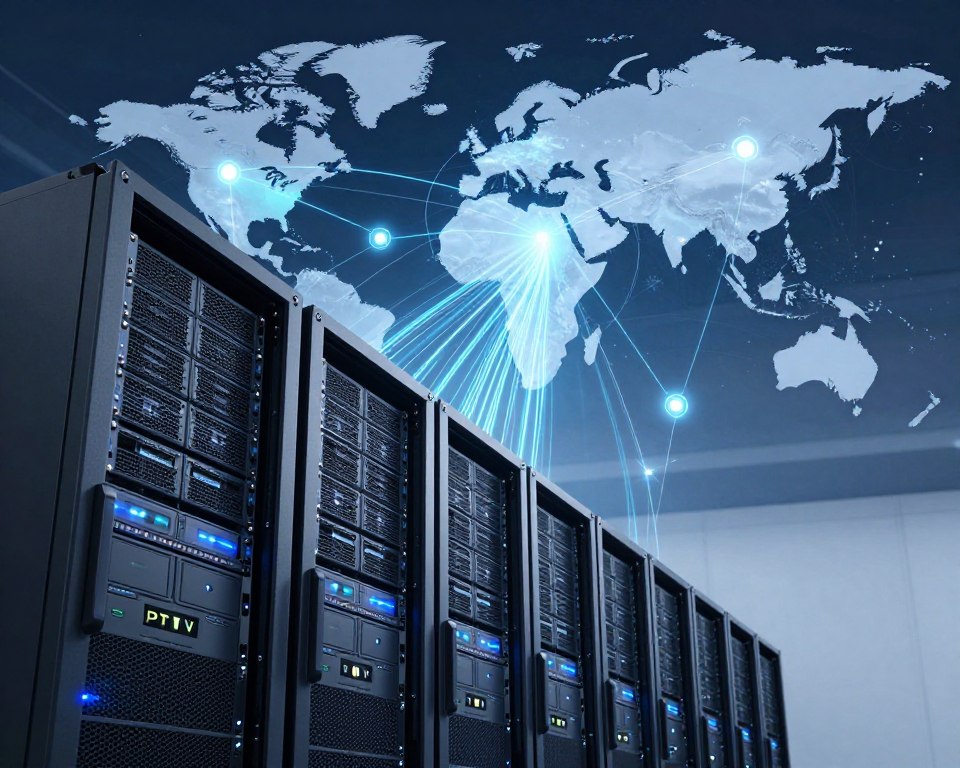
Behind every smooth streaming experience is a complex ecosystem of servers and delivery networks ensuring your content arrives flawlessly. This infrastructure operates on managed networks that prioritize television delivery.
Understanding this foundation helps explain why some services deliver superior performance. The technology represents more than just television over your internet connection.
Server Functions and Content Delivery Networks
Your provider operates on dedicated networks with exclusive bandwidth allocation. This creates a private high-speed lane for video traffic.
Server functions begin with content acquisition and storage. Providers secure licensing rights and encode television content into efficient formats like MPEG4.
When you select a program, the server network streams data packets directly to your IP address. This personalized approach differs from traditional broadcast methods.
Content delivery networks enhance performance by caching popular channels closer to users. This reduces latency and ensures instant loading of high-demand shows.
The managed infrastructure guarantees consistent, buffer-free viewing. This reliability sets legitimate services apart from unmanaged internet streaming platforms.
Residential and Commercial IPTV Applications
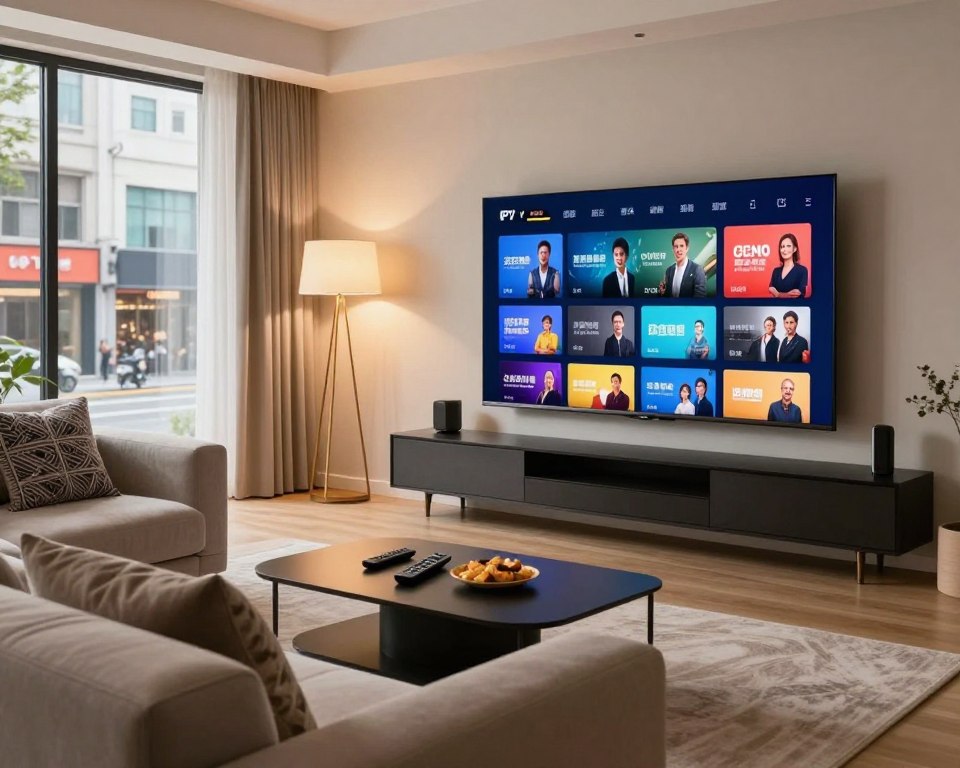
From airport terminals to hospital rooms, IPTV technology serves millions of users across both residential and business settings. These versatile iptv services have transformed how organizations deliver information and entertainment.
Commercial deployments began around 2002, bringing television and media to diverse locations. Hotels now offer sophisticated in-room entertainment service through dedicated systems. Hospitals and senior care facilities provide reliable television access to enhance patient comfort.
Home Entertainment vs. Business Deployments
Business services excel at centralized management. A single administrator can control content across hundreds of screens simultaneously. This allows targeted programming for different areas within large facilities.
Residential iptv services focus on family flexibility. Households enjoy multiple set-top box installations with one subscription. Family members can watch different live channels simultaneously throughout the home.
Innovative features like wireless PVRs demonstrate residential versatility. Businesses benefit from scalable services that broadcast corporate communications alongside standard television channels. This dual-market success validates the technology’s broad access capabilities.
IPTV Service Providers and Industry Trends
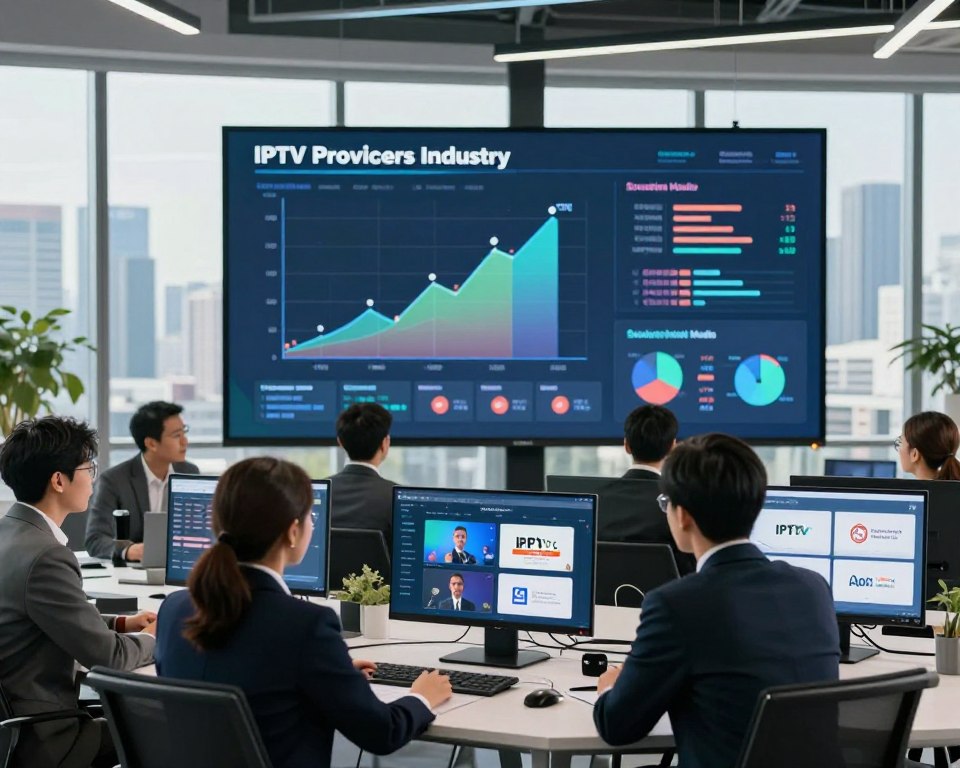
Global adoption of internet television services has reached remarkable levels, transforming entertainment consumption worldwide. The industry’s expansion reflects a fundamental shift in viewing preferences toward flexible, personalized options.
Market Growth, Revenue Projections, and Regional Insights
The streaming television market demonstrates extraordinary momentum. From $12 billion in 2009, the sector grew to $68.84 billion by 2023.
Projections indicate continued strong growth reaching $200.22 billion by 2030. This represents a 16.8% compound annual growth rate.
| Region | Subscriber Leadership | Revenue Contribution | Key Factor |
|---|---|---|---|
| Europe & Asia | Highest subscriber numbers | Significant share | Widespread adoption |
| North America & Europe | Strong user base | Largest revenue share | Higher ARPU |
| Global Emerging Markets | Rapid growth | Increasing contribution | Infrastructure expansion |
Legitimate providers like Sling TV and YouTube TV operate with proper licensing. These trusted brands offer secure alternatives to questionable services.
The 2015 milestone when internet television users surpassed satellite subscribers in Western Europe confirmed the technology’s viability. Regional deployments like Bell Canada’s “Bell Fibe” demonstrate successful local adaptations.
These trends give consumers confidence in choosing modern television services. The industry’s sustained growth indicates a permanent shift in entertainment delivery.
Legal, Security, and Compliance Considerations in IPTV

Your entertainment choices should always prioritize safety and legality. Understanding the difference between legitimate and unauthorized streaming options protects your household.
Legal iptv services operate with proper licensing agreements. They maintain formal partnerships with television networks and studios.
Legitimate Licensing vs. Illegal IPTV Services
Trusted providers like Sling TV and YouTube TV offer transparent service terms. They ensure your subscription supports content creators ethically.
Illegal operations capture broadcast signals without permission. They rebroadcast content at suspiciously low prices.
These unauthorized services pose serious security threats. Unvetted software can infect devices with malware and spyware.
| Feature | Legal Services | Illegal Services |
|---|---|---|
| Content Licensing | Proper agreements with studios | No legal rights to broadcast |
| Security Protection | Vetted apps from official stores | Potential malware exposure |
| Service Reliability | Consistent streaming quality | Frequent buffering and outages |
| Legal Standing | Fully compliant with regulations | Copyright infringement risks |
Warning signs include extremely low pricing for thousands of channels. Lack of professional websites and anonymous payment methods also indicate problems.
Choosing legitimate providers ensures safe streaming experiences. This responsible way to enjoy television protects your family and supports creative industries.
Future Developments in IPTV and Streaming Media
Tomorrow’s entertainment ecosystem will blend cutting-edge technologies with user-friendly platforms. This evolution empowers creators and enhances viewer experiences simultaneously.
Innovative Delivery Models and Emerging Technologies
Artificial intelligence now personalizes your viewing journey across video demand libraries. These smart systems learn your preferences to suggest programs you’ll love.
Fifth-generation networks enable broadcast-quality streaming on mobile devices. You can watch favorite shows anywhere without compromising visual excellence.
Interactive features transform passive viewing into engaging experiences. Real-time voting during live television events creates unprecedented audience participation.
The democratization of broadcasting allows anyone to launch specialized channels. Fitness instructors, chefs, and educators can share their expertise globally.
Integration with OTT and Playout Solutions
Cloud-based playout software eliminates expensive broadcast equipment needs. Platforms like Muvi Playout manage scheduled programming from standard computers.
Over-the-top integration combines reliability with flexibility. Hybrid solutions deliver guaranteed quality across unlimited devices and times.
No-code platforms remove technical barriers to content creation. Services like Smart Movie TV offer scalable hosting with multi-device support.
These advancements make media distribution accessible to all creators. The future promises more personalized, interactive television content for everyone.
Conclusion
As we reach the end of our exploration, the advantages of internet-based entertainment become crystal clear. You now understand how this technology delivers television content through your internet connection, offering both live broadcasts and on-demand program options.
The flexibility of this service puts you in complete control of your viewing schedule. You can enjoy superior streaming quality across multiple devices with one subscription. This personalized experience represents a significant upgrade from traditional television packages.
Take the next step toward modern entertainment. Research legitimate IPTV services in your area to find the perfect fit for your household. Join millions who have already discovered this revolutionary way to access television content.
Your entertainment journey continues with endless possibilities for customization and control. Embrace the future of viewing with confidence and excitement.